News
Opeeka can help organizations leverage their electronic health records to provide real-time feedback to clinicians and patients. Providers could more accurately and effectively assess and improve their performance.

Opeeka can help organizations leverage their electronic health records to provide real-time feedback to clinicians and patients. Providers could more accurately and effectively assess and improve their performance.
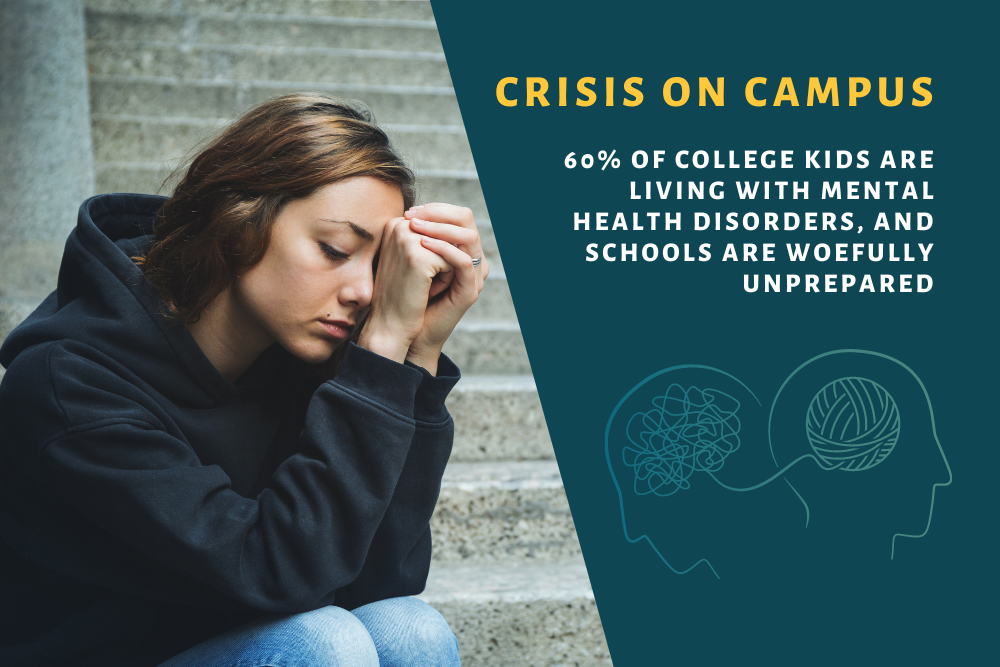
American college students are facing an unprecedented mental health crisis. Three in five (60%) college students reported being diagnosed with a mental health condition by a professional, the most common afflictions being anxiety and depression, according to an exclusive Fortune survey of 1,000 college students conducted by The Harris Poll in June.
AI promises to make it more practical to incorporate SDOH into care management and population health strategies. AI can identify consumers whose health issues are related to SDOH and then help clinicians with targeted interventions to help them better manage their health while maximizing the use of resources.
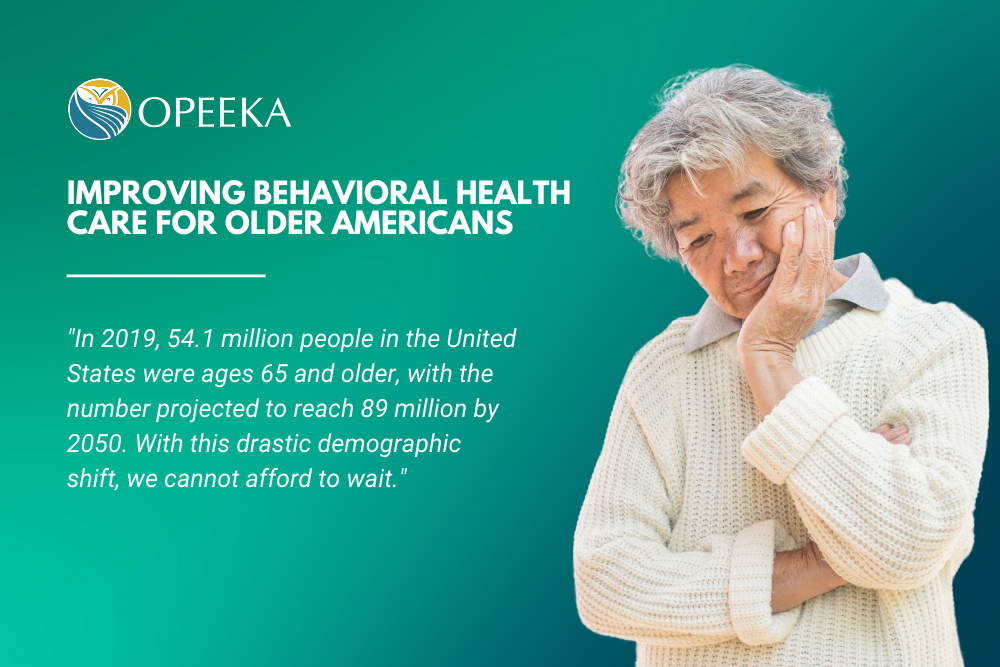
In 2019, 54.1 million people in the United States were ages 65 and older, with the number projected to reach 89 million by 2050. With this drastic demographic shift, we cannot afford to wait.
Stakeholders from the healthcare and technology sectors are urging the White House’s National Artificial Intelligence Initiative Office to add healthcare to its efforts.
In the not so distant future, artificial intelligence and machine learning technologies could transform the health care you receive, whether you’re aware of it or not.
An infrastructure for VBC not only requires hierarchy support, but also the ready exchange of a more comprehensive set of health data. Traditional electronic health record (EHR) systems were built to solve the challenges of transactional data related to claims submission, billing, and processing of adjudication, clinical data, and pharmacy data. VBC requires more insight into patient health and outcomes. It requires the creation of a longitudinal health record (LHR) that not only manages and shares traditional structured EHR data (e.g., data that fits neatly into fixed fields), but also enables the proper digitization and exchange of clinically rich data that resides in unstructured form as charts, notes, images, audio and video files, as well as freeform text of character large objects (CLOBs).
The study shows that machine learning can provide a foundation for facilitating better resource allocation in mental healthcare. Researchers believe the present study can motivate mental health providers to shift from reactive care to preventative care.
For healthcare organizations to successfully transition to value-based care, data sharing methods between providers and payers must be faster, more transparent, and done with trust.

Researchers agree that to focus on the inequities of marginalized groups, it is critical to gather data on their experiences. But a data set is useless if it is not collected in a culturally sensitive way, and current research tools are not always sensitive enough to gather information about nonwhite populations. Non-English speakers, for example, are usually not represented in mental health data, because they do not understand survey questions. Furthermore, because people self-identify in a number of ways, racial and ethnic demographics can be difficult to capture.